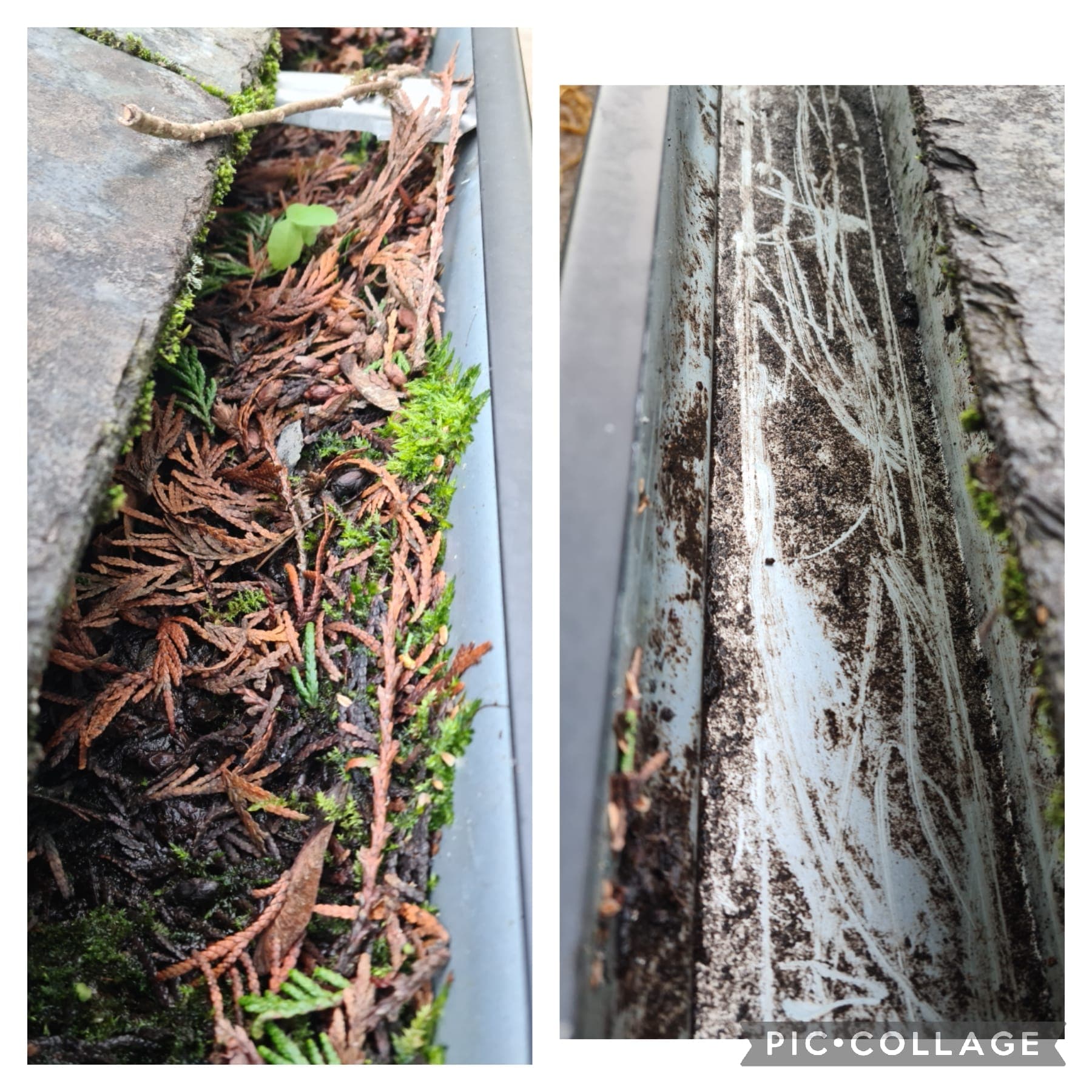
Check your gutters from ground level several times a year and plan to clean them at least once a year. For many Irish homes, late autumn after the main leaf fall is the best single time. Add a spring clean when mature trees overhang the roof, moss regularly washes from the tiles, the gutter has overflowed before, or the roof layout traps debris.
Frequency is a starting point, not a guarantee. One open, tree-free property may drain well for a year, while another home on the same road fills quickly with leaves, needles or silt. The condition of the gutters—and how they behave in rain—should decide the schedule.
A Gutter Cleaning Schedule for Irish Homes
Build the schedule around what reaches the roof. Deciduous leaves tend to create a late-autumn load. Evergreen needles, roof moss, wind-blown grit and bird nesting material can arrive at other times. Properties near the coast or exposed to wind may also collect fine debris without having a large tree directly overhead.
When once a year may be enough
An annual clean may suit a straightforward roof with no nearby mature trees, no recurring moss and a record of free-flowing gutters. Check during heavy rain from a safe position at ground level. If water reaches the outlets without spilling or running behind the gutter, the schedule may be working.
When to consider twice-yearly cleaning
Add a spring visit after the late-autumn clean if trees overhang the property, the roof sheds moss, valleys collect material, birds repeatedly visit the roofline, or the gutters have blocked before. Spring clearance removes winter debris and gives you a chance to spot a developing issue before another autumn.
When not to wait for the calendar
Overflow, wall staining, visible plant growth or standing water means the system needs attention regardless of when it was last cleaned. A recently cleared gutter that still overflows may be damaged, misaligned, undersized for the roof area, or connected to a blocked downpipe or drain. Cleaning alone cannot fix every cause. Use the Dublin blocked-gutter troubleshooting guide to distinguish the most common symptoms before requesting a quote.
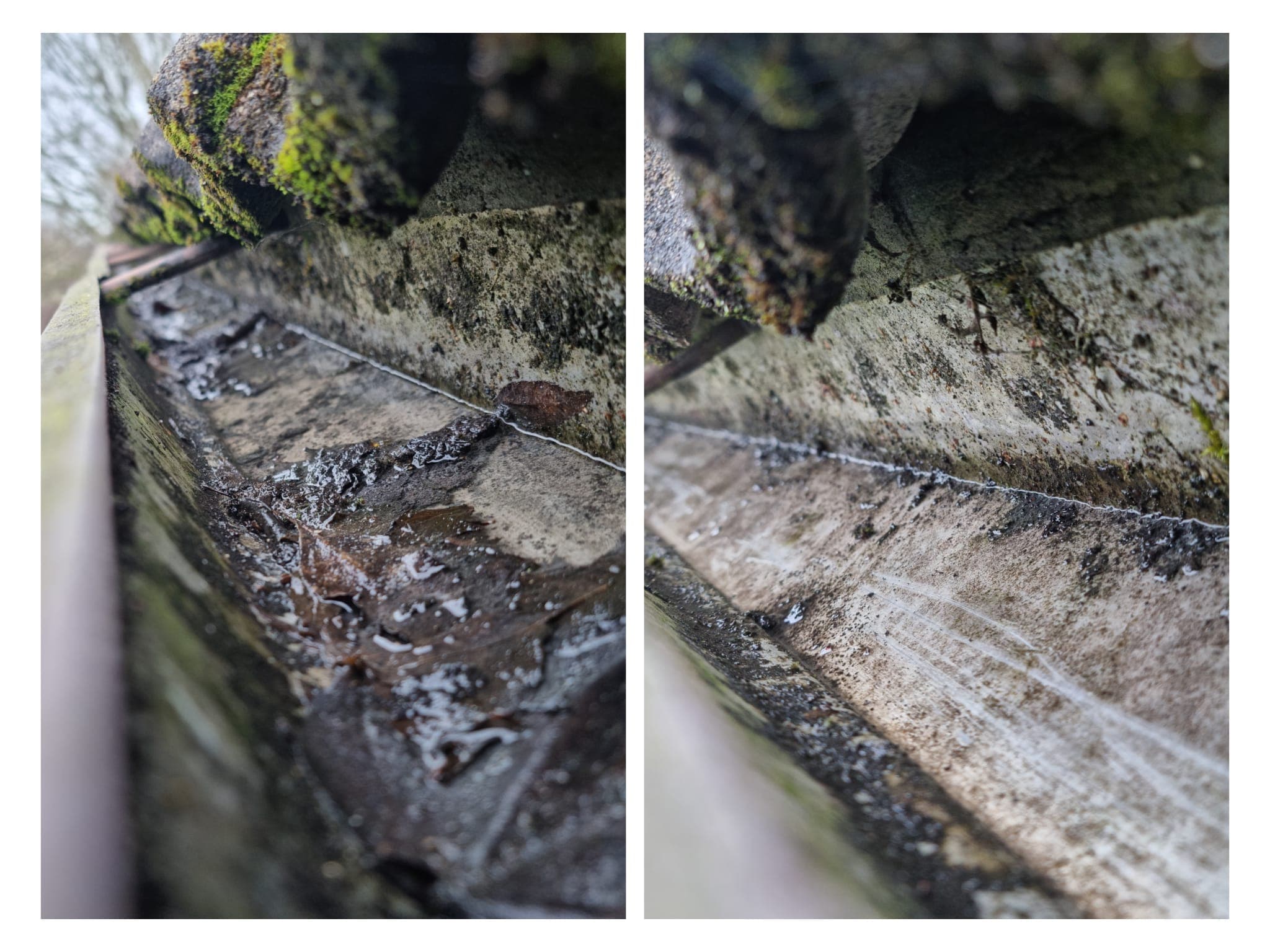
Warning Signs of Clogged Gutters
The most useful inspection happens while it is raining. Stay on the ground and follow the water visually from the roof edge toward each downpipe. Watch for these signs:
- water spilling over the front edge like a curtain;
- water running down the wall or behind the gutter;
- overflow concentrated around one outlet or corner;
- leaves, moss, weeds or grass visible above the gutter line;
- dark streaks, green growth or peeling finish beneath a joint;
- a gutter section that sags or pulls away from the fascia;
- water still sitting in the channel well after rain;
- drips or damp near an upstairs ceiling, eaves or external wall;
- birds repeatedly carrying nesting material to the roofline; or
- increased insect activity around damp debris or pooled water.
One symptom can have more than one cause. Overflow along a whole run often suggests accumulated debris or poor fall; overflow at a single outlet may point to a local blockage. Water leaking from a joint can remain after cleaning if the seal or fitting is damaged.
What Happens If You Do Not Clean Gutters?
Water reaches surfaces it was meant to avoid
Gutters direct roof water away from walls and the base of the building. When a channel or outlet is blocked, repeated overflow can wet masonry, erode finishes, stain walls and splash water around the property perimeter.
Fascia, soffits and roof edges stay damp
Saturated debris holds moisture against the roofline. Timber components can deteriorate when they are repeatedly wetted and cannot dry. Water running behind the gutter may also be harder to spot than a dramatic overflow at the front.
A cleaning problem can become a repair problem
The weight of wet silt and plants adds strain to gutter brackets. Persistent standing water can expose a lost fall, loose fixing or damaged joint. Clearing debris early is maintenance; replacing damaged guttering or addressing internal damp is a different job.
Do Blocked Gutters Attract Pests?
They can create useful resources for pests: water, moisture, organic material and shelter close to the eaves. That does not mean every blocked gutter contains pests, or that gutter cleaning alone treats an established infestation.
Standing water and mosquitoes
A blocked or poorly aligned gutter can hold shallow water instead of draining after rain. Mosquitoes need standing water for their immature stages, so removing pooled water and restoring drainage removes a potential breeding site. The same damp material can support midges and other small insects.
Birds and nesting material
Leaves, twigs and sheltered roof edges can be attractive nesting material or locations. If birds repeatedly enter one point, do not reach into it or vacuum blindly. Active wild bird nests, eggs and young are protected; pause work on the affected section and seek appropriate guidance. For persistent roofline issues, see the bird control service in Dublin.
Rodents at the roofline
Rodents use sheltered routes, branches, damaged eaves and existing openings to explore buildings. Debris at the roofline does not prove rats or mice are present, but neglected gutters can hide signs and keep adjacent materials damp. Scratching sounds, droppings or gnawing need a separate pest inspection. The Dublin rats and mice entry guide explains the signs in more detail.
Ants, moisture and decaying material
Ants forage where moisture and other insects are available, and some species use damp or deteriorating timber. Termites are often mentioned in international gutter advice because moisture-damaged wood can suit them where they occur; for a Dublin homeowner, ants and other moisture-associated insects are the more practical roofline warning signs. Read the Dublin ant season guide if trails continue after the moisture source is corrected.
Gutter clearance is prevention, not extermination. If pest activity continues, identify the species and entry point rather than treating the gutter as the only cause.
Is Autumn or Spring Better for Gutter Cleaning?
If you can schedule only one clean, late autumn is usually the stronger choice because it removes the main leaf load before prolonged winter wet weather. Wait until most nearby deciduous leaves have fallen—unless the gutters are already overflowing.
Spring is the useful second window. It clears moss, twigs, fine silt and winter debris and lets you check that outlets are open. It is also a time to watch for bird nesting activity. Never disturb an active nest to keep a maintenance appointment.
Can Gutter Guards Replace Cleaning?
Guards can reduce the amount of large leaf material entering a gutter, but they do not make the system maintenance-free. Fine silt, roof grit, needles, seeds and moss can sit on the guard or pass through it. Debris can also gather at valleys and outlets.
Inspect guarded gutters during rain just as you would an open channel. If water flows over the guard instead of through it, the guard itself may need cleaning. Confirm how a professional will access and replace any removable sections before work begins.
DIY Check or Professional Gutter Cleaning?
Homeowners can do a useful first check without climbing: look for debris, observe flow in rain, check for staining and photograph problem areas from the ground. Avoid leaning from windows, walking on a roof or improvising access over a conservatory.
Professional help is sensible when the roofline is above easy reach, the ground is uneven, extensions obstruct access, debris is compacted, or you cannot see where the blockage ends. Supreme Pest Control uses high-reach vacuum equipment operated from the ground for accessible residential gutters.
See the Dublin gutter cleaning service for the verified method, coverage and real before-and-after photographs. If you are comparing providers, use the guide to choosing a gutter cleaning company in Dublin. For quote factors, the existing gutter cleaning cost guide explains what changes the final amount.
Are Your Gutters Due for a Clean?
Send your Eircode, property type, number of storeys and any visible warning signs for a free, no-obligation quote across Dublin, Wicklow, Kildare and Meath.
Prefer a form? Request a gutter cleaning quote online.
Frequently Asked Questions
How often should gutters be cleaned in Ireland?+
At least once a year is a sensible baseline for many Irish homes, with visual checks several times during the year. Consider a second clean in spring if the property is near trees, the roof sheds moss, the gutter has overflowed before, or the layout collects debris quickly.
What is the best month to clean gutters in Ireland?+
Late autumn, after most leaves have fallen and before prolonged winter rain, is the most useful single window. The exact month depends on nearby trees and weather. A spring check can catch winter moss, twigs and nesting material before heavier seasonal growth.
How do I know if my gutters are clogged?+
Look from ground level during rain for water spilling over the edge, running behind the gutter or collecting near one outlet. Other signs include visible plants, dark wall streaks, sagging sections, debris at the downpipe opening and damp near the eaves.
Can clogged gutters attract pests?+
Yes. Standing water can provide breeding water for mosquitoes, wet organic material can support insects such as ants, and debris can provide birds with nesting material. Rodents may use sheltered roofline routes, although a gutter blockage alone does not prove a rodent infestation.
Should gutters be cleaned before or after autumn leaves fall?+
If you only plan one autumn clean, wait until most nearby deciduous trees have dropped their leaves. Clean earlier if water is already overflowing, then check again after the main leaf fall rather than leaving an active blockage through wet weather.
Do gutter guards mean I never need gutter cleaning?+
No. Guards may reduce larger leaves, but moss, grit, seeds and fine silt can still accumulate on or beneath them. The outlets and downpipes can also block. Guarded gutters still need condition checks and cleaning when drainage slows.
Can I clean gutters myself?+
You can inspect for obvious problems from ground level. Cleaning at height adds fall, access and wet-surface risks, especially on upper storeys or around extensions and conservatories. If you cannot reach the full run safely with suitable equipment, use a professional service.