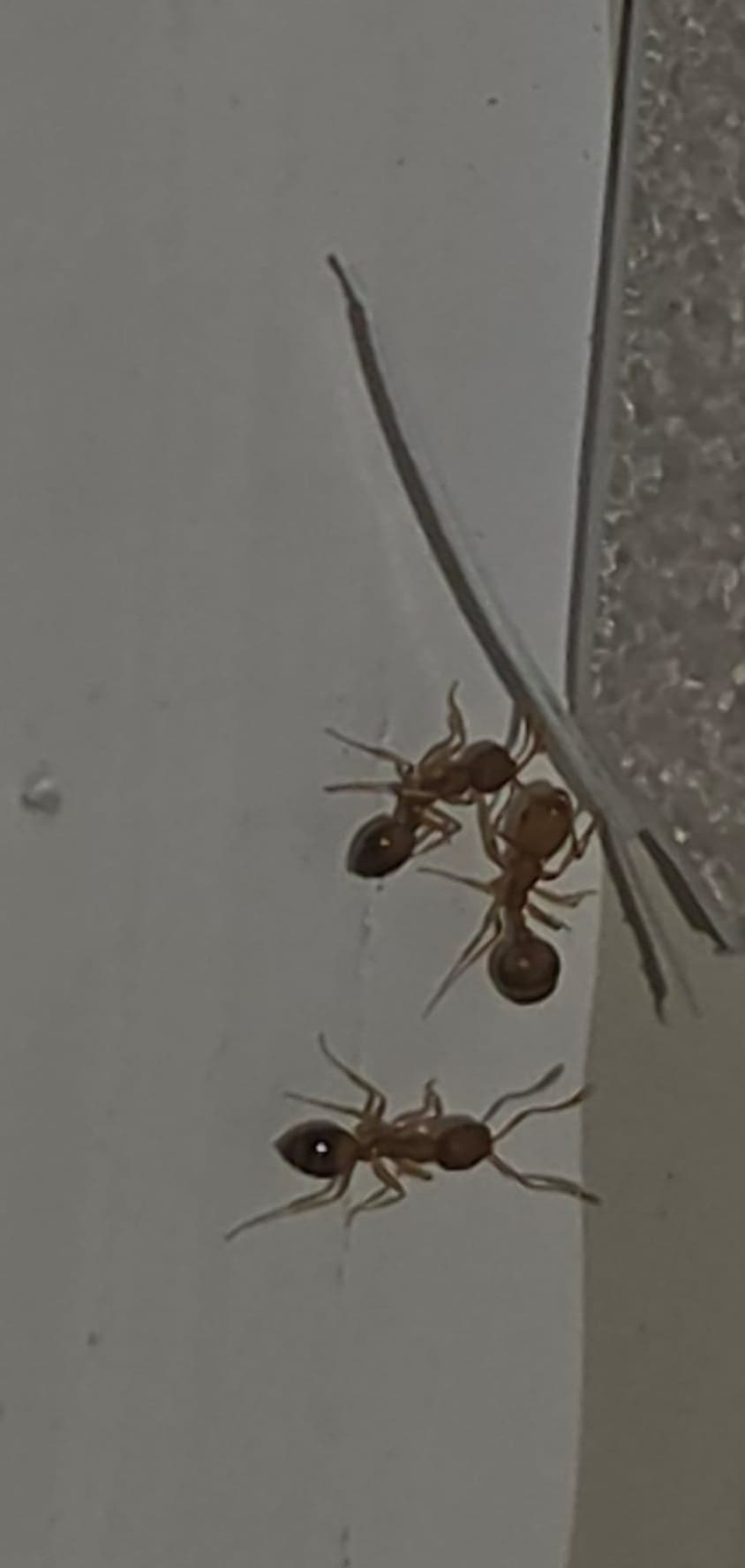
Every summer, thousands of Dublin homeowners have the same experience. An ant trail appears on the kitchen worktop. They buy a can of spray from the hardware shop. The trail disappears for a few days. Then it comes back, often in a slightly different location. They buy more spray. The ants move somewhere else. By August, the problem is worse than when they started.
This happens because most people are treating the symptom, the visible trail, rather than the cause, which is a colony of up to 15,000 workers with a queen that can live for 15 years, producing new foragers faster than a can of spray can kill them.
This guide explains exactly what is happening when ants appear in your Dublin home in summer, why the timing is not random, what Flying Ant Day actually is, the specific risk of Pharaoh ants in Dublin apartments, and what permanent professional ant control in Dublin looks like.
Looking for a broader pest guide? Read: Complete Guide to Pest Control in Dublin 2025: Every Pest, Every Area →
Why Do Ants Invade Dublin Homes in Summer?
The first thing to understand is that ants are not coming into your Dublin kitchen to escape the summer heat. The opposite is true, warm temperatures are what drive their behaviour outdoors, not indoors. Ants come inside for one reason: food and water are available inside, and their rapidly growing summer colony needs them urgently.
From March onward, as soil temperatures in Dublin gardens begin rising above 10°C, ant colonies emerge from their winter semi-dormancy and population growth accelerates rapidly. By June, a mature colony of black garden ants (Lasius niger) may contain 5,000 to 15,000 workers, all of them requiring food. The colony sends out scout ants in expanding search patterns. When a scout finds a food source, your kitchen bin, a crumb under the toaster, a spilled drinks can, the situation changes immediately.
The Science of the Pheromone Trail: Why Wiping the Counter Is Not Enough
When a scout ant finds food in your kitchen, it does not simply eat and return. It deposits a chemical pheromone trail on its return journey to the nest, a precise chemical message that other workers can detect with their antennae. Those workers follow the trail to the food, collect it, and deposit their own pheromone on the way back. Each ant that makes the trip reinforces the trail. More foragers means a stronger signal, which recruits even more ants.
How a pheromone trail self-reinforces
Scout finds food
Single ant locates food source in your kitchen
Trail deposited
Scout deposits chemical pheromone on return to nest
Workers recruited
Workers follow trail, reinforce it on each return journey
Highway established
Hundreds of workers per hour following self-reinforcing chemical route
Wiping the kitchen surface removes the visible ants and disrupts the pheromone signal temporarily. However, the nest continues to send scouts. The next scout to find the same food source, or a new one, begins the process again from scratch. This is why ant trails in Dublin kitchens appear to move or disappear and reappear: the trail is being reset by fresh scouting activity, not actually eliminated.
The only way to stop the trail permanently is to eliminate the food source or eliminate the colony itself. Professional ant treatment in Dublin achieves both, and seals the entry points that allowed access in the first place.
Dublin's Ant Season Calendar: Month by Month
Ant activity in Dublin follows a predictable annual pattern. Understanding it helps you act before the peak rather than in the middle of it.
| Month | What Is Happening in Dublin Gardens & Homes |
|---|---|
| March | Queen ants begin emerging from winter dormancy on warm days above 10°C. Small pioneer nests established near south-facing walls. Most homeowners see no activity yet. |
| April | Worker production accelerates. First ant trails appear in gardens. Activity concentrated outdoors, not yet reaching most Dublin kitchens. |
| May | Colony populations explode rapidly. Scout ants begin probing indoor entry points, particularly around south-facing doors and kitchen utility areas across Dublin suburbs. |
| June | 🔴 ANT SEASON BEGINS IN EARNEST. Trail activity inside Dublin homes peaks. Hardware shops fill with ant sprays. Professional ant control call volume rises sharply across D1 to D24. |
| July | 🔴 PEAK SEASON. Colony size at annual maximum, up to 15,000 workers. Flying ant nuptial flights begin in late July following warm, humid days in Dublin. |
| August | 🔴 FLYING ANT DAY PERIOD (late July to mid-August). Peak nuptial flights. New queens land and establish new nests. Ant activity inside homes reaches highest point of year. |
| September | Activity begins declining as temperatures drop. Late nuptial flights possible on warm September days. Colonies begin preparing for winter dormancy. |
| October | Outdoor ant activity drops significantly. Colony enters dormancy. Pharaoh ant colonies in heated apartment buildings remain active year-round regardless. |
Flying Ant Day in Dublin: What It Actually Is and Why It Happens
"Flying Ant Day" is perhaps the most misunderstood pest event in Ireland. It is not a disaster, it is not a sign of an unusual infestation, and it is not actually a single day. Here is what is genuinely happening.
What Flying Ant Day is, and what it is not
What it IS:
- ✓The nuptial flight, the reproductive event of the colony
- ✓Males and newly-mated queens (alates) leaving to found new colonies
- ✓A biological event triggered by heat, humidity, and low wind
- ✓A sign of a mature, well-established colony nearby
- ✓A period lasting days to weeks, not a single day
What it is NOT:
- ✕A single national event, it happens on different days across different areas
- ✕A sign that ants are attacking your home
- ✕Evidence of a new infestation arriving, the colony is already established
- ✕An emergency requiring immediate chemical treatment outdoors
In Dublin, nuptial flights are most commonly triggered by a combination of temperatures above 13°C, low wind speed, and high relative humidity, conditions that frequently occur the day after a warm rain shower in late July or August. Multiple colonies across Dublin may take flight simultaneously when conditions align, creating the impression of a single coordinated event.
If flying ants are emerging from inside your property, from under floorboards, from wall sockets, or from loft spaces, this indicates a colony established inside the structure itself. This requires professional assessment and treatment. Flying ants emerging from your garden are generally not a cause for alarm, but they are a sign of a very mature colony that will continue generating foragers throughout summer.
The Two Ant Species That Matter in Dublin: Garden Ant vs Pharaoh Ant
According to the National Biodiversity Data Centre, 23 ant species have been recorded in Ireland. In practice, virtually every ant infestation in Dublin homes is caused by one of two species, and distinguishing between them is critical, because they require completely different treatment approaches.
| Feature | Black Garden Ant (Lasius niger) | Pharaoh Ant (Monomorium pharaonis) |
|---|---|---|
| Size | 3–5mm | 1–2mm (tiny) |
| Colour | Black or dark brown | Pale yellow to light brown |
| Season | Active April to October | Year-round in heated buildings |
| Typical location | Gardens, patio nests, kitchens | Apartments, hospitals, wall voids, pipe runs |
| Colony size | 5,000 to 15,000 workers | Can reach 100,000+ in large buildings |
| Flying ants | Yes, in July and August | Very rare, reproductive by budding |
| Treatment method | Residual insecticide to nest | Slow-acting bait only, NEVER spray |
| DIY risk | Moderate, sprays just delay solution | Severe, sprays cause colony splitting |
⚠️ The Pharaoh Ant Risk in Dublin Apartments, Read This First
If you live in a Dublin apartment block, particularly along the Luas Red or Green Line corridor, or in any modern centrally-heated building, and you see tiny pale yellow ants year-round, there is a significant chance you are dealing with Pharaoh ants (Monomorium pharaonis), not the common black garden ant. The difference matters enormously.
Pharaoh ants were first introduced to Ireland in the early 19th century through commerce and have been recorded in Dublin since at least the 1980s. They spread through apartment buildings via pipe runs, wall voids, and cable conduits, and because they breed by colony budding rather than nuptial flight, a single building can become infested throughout without anyone seeing a single flying ant.
Why Pharaoh ants in Dublin apartments are a serious health risk
- ⚠Pharaoh ants carry Salmonella, Staphylococcus, and Clostridium on their bodies
- ⚠They have been found feeding under bandages on hospital patients and around the mouths and eyelids of infants in care settings
- ⚠They are attracted to moisture, protein, and sugar, making kitchens and bathrooms in apartments prime territory
- ⚠A single colony splitting into satellite nests (caused by incorrect DIY treatment) can spread infestation throughout an entire apartment block
CRITICAL: Do not use repellent sprays on Pharaoh ants under any circumstances
Consumer ant sprays and repellent products cause Pharaoh ant colonies to bud, splitting into multiple satellite nests throughout the building. What starts as one nest becomes ten, each with its own queen. Only slow-acting bait administered by a licensed professional is effective. If you suspect Pharaoh ants in your Dublin apartment, call Supreme Pest Control before touching them.
Warning Signs: How to Know if You Have an Ant Problem in Dublin
A moving trail of ants across kitchen worktops, floors, or walls
Active infestation, treat promptly
Small piles of fine soil or sand near door frames, patio edges, or skirting boards
Nest activity nearby, inspect garden
Ants consistently appearing near the same area despite cleaning
Active pheromone trail, colony nearby
Flying ants emerging from indoors or from garden paving
Mature established colony, professional treatment recommended
Tiny pale yellow ants visible year-round in a heated apartment
Likely Pharaoh ants, call professional immediately, do not spray
Loose or damaged mortar between patio slabs with ant activity
Outdoor nest, accessible for treatment
How Ants Enter Dublin Homes: The Six Most Common Entry Points
Understanding how ants are accessing your Dublin home is the first step toward preventing them from returning after treatment. Dublin's housing stock, with its mix of Georgian terraces, Victorian red brick, 1930s semis, and modern apartments, creates specific vulnerability patterns.
Dublin's older housing stock frequently has degraded rubber door sweeps or gaps under rear kitchen doors, common in terraced houses across Rathmines, Drumcondra, and Phibsborough. If light passes through the gap, an ant colony can use it.
Where plumbing, electrical conduit, or gas lines enter through exterior walls, the surrounding sealant degrades over time. These are prime entry points particularly in Victorian and Edwardian properties across Dublin 6, 7, and 8.
Loose pointing between patio slabs is the primary outdoor nesting site for black garden ants across Dublin suburbs. Tallaght, Lucan, Blanchardstown, and Swords consistently produce the highest patio ant nest call volume each summer.
These ventilation points in cavity walls are necessary but provide direct access for ants. Common in 1930s to 1970s Dublin housing across Clondalkin, Crumlin, and Ballyfermot.
Silicone sealant around window frames typically has a lifespan of 10 to 15 years before cracking, well within the age range of most Dublin homes. Deteriorated sealant creates accessible entry corridors particularly on ground-floor kitchen windows.
Dublin's growing number of timber-decked gardens create ideal sheltered nesting environments beneath the boards. Ants nest under the decking and enter the house through adjacent door gaps.
Ant Pressure by Dublin Area: What Your Part of the City Faces
Ant activity in Dublin is not uniform. Housing type, garden size, building age, and proximity to green spaces all influence which areas generate the most ant treatment call-outs each summer.
Dublin City Centre (D1–D8)
Georgian terraces with stone and brick construction create extensive cavity opportunities. Ant trails on kitchen worktops in basement flats and ground-floor apartments are frequently reported. Pharaoh ant activity in converted apartment buildings.
North Dublin (Drumcondra, Glasnevin, Finglas, Swords, Artane)
Semi-detached and terraced housing from 1920s to 1950s with older mortar and deteriorated pointing around foundations. Swords and Artane see high suburban garden ant volumes each summer due to large garden sizes.
South Dublin (Rathmines, Dundrum, Dún Laoghaire, Rathfarnham)
Victorian terraced housing in Rathmines and Ranelagh sees ant entry consistently via degraded Victorian-era pipe sealant. Larger gardens in Dundrum and Rathfarnham produce substantial patio nest colonies from June onward.
West Dublin (Tallaght, Lucan, Blanchardstown, Clondalkin)
West Dublin's 1970s to 1990s housing estates have large garden-to-house ratios. Timber decking, patio slabs, and compost heap proximity drive the highest ant treatment volumes in the city each summer. Tallaght and Lucan are consistently our highest-volume ant control areas from June to August.
Luas Corridor Apartments
Modern apartment blocks along the Red and Green Luas lines see disproportionate Pharaoh ant activity due to central heating maintaining year-round warm conditions. If you live in an apartment along the Luas corridor and see tiny pale yellow ants, do not spray. Call a professional immediately.
Why DIY Ant Treatments Fail in Dublin, Every Time
Every June, the shelves of Dublin hardware shops and supermarkets fill with ant sprays, powders, chalk lines, and bait stations. Most Dublin homeowners try at least one of them before calling a professional. Here is why they consistently fail.
Sprays kill foragers, not the queen
Consumer ant sprays are contact insecticides, they kill the ants they touch. The queen, deep in the nest, is never exposed. The colony replaces dead foragers within days. The pheromone trail resumes within a week.
Supermarket bait is too weak
Professional ant bait contains active ingredient concentrations calibrated to be carried back to the nest in sufficient quantity to eliminate a 5,000 to 15,000 worker colony. Consumer bait stations rarely achieve this at a commercially viable concentration.
Repellents scatter the colony
Some consumer products and natural remedies (vinegar, peppermint oil, chalk lines) act as repellents, they redirect ants rather than eliminating them. This can cause the colony to establish satellite entry points in new locations throughout the property.
The nest is never addressed
Unless you locate the nest, excavate it, and apply professional-grade insecticide directly, the source of foragers remains intact. A mature nest can contain multiple queens, making surface treatment irrelevant to colony survival.
Immediate Action
What to Do Right Now if You Have Ants in Your Dublin Home
Resist the urge to grab ant spray. Spraying alerts the colony and can scatter it into satellite nests. Put the spray down.
Identify what the trail is targeting, a crumb, a bin, a sticky residue, pet food, and remove it. Clean the area with warm soapy water to dissolve any pheromone residue.
Sugar, cereal, fruit, pet food, and bread are all targets. Place them all in sealed containers to remove the reward driving the trail.
Follow the ant trail outside if possible. It will lead toward the nest, usually under patio slabs, along the foundation line, or in soft soil. Note the location. Don't disturb it.
We treat the colony at source, not just the trail. Same-day service across all Dublin D1 to D24, Meath, Kildare and Wicklow. One visit resolves most garden ant infestations.
What Professional Ant Control in Dublin Looks Like
Professional ant treatment works differently from everything available over the counter, because it targets the colony, not the trail.
The technician inspects the exterior perimeter to identify the nest location, trails, and entry points. This is the step DIY misses entirely, without knowing where the colony is, treatment is guesswork.
For garden ants, a professional-grade residual insecticide is applied directly to the nest entrance and foraging routes. The insecticide is carried back into the nest by workers and spreads to the queen and colony. The product remains active on treated surfaces for weeks, eliminating any ants that subsequently contact it.
After treatment, the technician identifies and advises on sealing the entry points used, typically door threshold gaps, pipe penetrations, and cracked patio pointing. Supreme Pest Control includes this advice on every visit.
For Pharaoh ant infestations, the approach is completely different. Slow-acting gel bait is placed at active feeding sites throughout the affected areas. Workers carry the bait back to satellite nests. The bait is consumed throughout the colony over 2 to 4 weeks, eliminating the infestation without triggering colony splitting. Multiple visits are required for full building treatment.
How to Prevent Ants Returning to Your Dublin Home
After professional treatment, these steps significantly reduce the likelihood of recurrence. Black garden ants can re-establish new colonies in the same garden the following summer, prevention is the most cost-effective long-term approach.
✓ Seal all entry points
Use silicone sealant on all gaps around door frames, window sills, and pipe entry points through exterior walls. Re-inspect every spring before ant season.
✓ Store all food in airtight containers
Sugar, cereal, fruit, bread, pet food, and anything sweet or protein-rich. A single crumb on an uncovered surface is enough to establish a new trail.
✓ Clean kitchen surfaces daily
Focus on areas around the hob, toaster, bin, and behind appliances. Ant trails reactivate from the residual organic material left on surfaces.
✓ Fix dripping outdoor taps
Standing water near the house foundation is a major attractant for ant colonies establishing new nests in summer.
✓ Lift and inspect patio slabs each April
Catch new nest establishment before the colony reaches its summer peak. A nest found in April contains hundreds of workers, in July, tens of thousands.
✓ Keep compost heaps and garden debris away from the house
Organic material near the foundation wall provides ideal nesting conditions. Move compost heaps at least 2 metres from the house perimeter.
External resource: The National Biodiversity Data Centre maintains the Ants of Ireland dataset, useful background on the 23 species recorded in Ireland. The FSAI provides pest control guidance for food businesses.
Ant Control Cost in Dublin 2025: Honest Pricing Guide
Most Dublin pest control companies do not publish ant treatment pricing online. Here is what professional ant control in Dublin realistically costs in 2025.
| Service | Price Range | Visits | Notes |
|---|---|---|---|
| Garden ant treatment (residential) | €90–€150 | 1 visit resolves most cases | Includes exterior nest treatment and entry point advice |
| Garden ant treatment (large property) | €130–€180 | 1 to 2 visits | Multiple nest sites or large garden perimeter |
| Pharaoh ant treatment (apartment) | Free survey then POA | Multiple visits required | Building-wide approach needed, priced by building size |
| Commercial ant treatment (restaurant/office) | Free audit then POA | Depends on species and building | HACCP documentation provided, see commercial pest control page |
Supreme Pest Control provides free no-obligation quotes before any work begins. Most residential garden ant treatments are resolved in a single visit. If a company quotes significantly below these ranges for a Pharaoh ant infestation, ask what is excluded, a single-visit Pharaoh ant treatment is not realistic.
Same-Day Available Across Dublin
Professional Ant Control Across All Dublin D1–D24
Supreme Pest Control treats the colony, not just the trail. Same-day service, DAFM-licensed technicians, child and pet safe treatments, and guaranteed results across every Dublin postcode from D1 to D24, County Meath, Kildare, and Wicklow.
All Dublin postcodes
PMU numbers on request
Once treatment is dry
We return if needed
Common Questions
Frequently Asked Questions About Ants in Dublin
Expert answers from our Dublin ant control technicians covering everything from Flying Ant Day to Pharaoh ants to pricing.
Why do ants come into Dublin homes in summer?
Ants don't enter Dublin homes to escape heat, they come looking for food and water for their expanding summer colony. As temperatures rise from May onward, scout ants search for food sources and deposit chemical pheromone trails back to the nest. Dublin's older housing stock with gaps around Victorian skirting boards and pipe penetrations provides easy access.
When is Flying Ant Day in Dublin?
Flying Ant Day in Dublin is typically a period from late July to mid-August, not a single day. Flying ants are sexually mature males and females (alates) released for the nuptial flight. In Dublin, flights are triggered by high temperature above 13°C, low wind, and high humidity, typically occurring after a warm spell, often the day following rainfall.
How do ants find food in my Dublin kitchen?
Scout ants deposit a chemical pheromone trail when they find food. Other workers follow this trail and add their own pheromone on the return journey, creating a self-reinforcing chemical highway. Cleaning the surface removes the trail temporarily, but the colony keeps sending scouts until the food source is gone or the colony is treated at source.
Why do DIY ant sprays not work?
Consumer sprays kill visible foragers but never reach the queen underground. The colony simply produces new foragers within days. Worse, some sprays scatter the colony causing it to split into multiple satellite nests, making professional treatment more complex. Professional treatment uses slow-acting products carried back to the nest by workers, eliminating the colony at source.
What are Pharaoh ants and should I worry in a Dublin apartment?
Pharaoh ants (Monomorium pharaonis) are tiny (1–2mm), pale yellow, and breed year-round in heated buildings. They're a known problem in Dublin apartment blocks and hospitals. Critically, never spray Pharaoh ants with repellent products. This causes colony budding where the colony splits into multiple nests throughout the building. Only slow-acting bait by a licensed professional works.
How much does ant control cost in Dublin?
Ant control in Dublin costs €90 to €180 for a residential property. Most garden ant infestations are resolved in a single visit. Pharaoh ant treatment in apartment buildings is priced following a survey. Supreme Pest Control provides free no-obligation quotes before any work begins.
Do you offer same-day ant control in Dublin?
Yes. Supreme Pest Control provides same-day ant control across all Dublin postcodes D1 to D24, including Tallaght, Swords, Blanchardstown, Rathmines, Drumcondra, Lucan, Clondalkin, and Dún Laoghaire, plus County Meath, Kildare, and Wicklow.
How do I stop ants coming back?
After professional treatment: seal all gaps around door frames and pipe entry points with silicone sealant, store all food in airtight containers, keep kitchen surfaces clean, fix dripping outdoor taps, and inspect patio slabs each spring for nest activity. Supreme Pest Control includes sealing advice on every visit.
Related Summer Pest Guides
Wasp Nest Removal Dublin 2025
Why wasp season peaks in July and August and how professional nest removal works.
Flea Treatment Dublin: Season Guide
Flea season peaks alongside ant season, the dormancy trap and why DIY fails.
Complete Guide to Pest Control Dublin 2025
Every pest, every Dublin area, seasonal calendar, and pricing in one guide.
Stop the Trail for Good
Contact Supreme Pest Control for Same-Day Ant Treatment in Dublin
Covering Tallaght, Swords, Blanchardstown, Lucan, Rathmines, Drumcondra, Clondalkin, Dún Laoghaire, and all Dublin postcodes D1 to D24, plus County Meath, Kildare, and Wicklow. Free quote. One visit resolves most garden ant infestations.
DAFM PMU Licensed · Child & Pet Safe · Guaranteed Results · 24/7 Available · All Dublin D1–D24