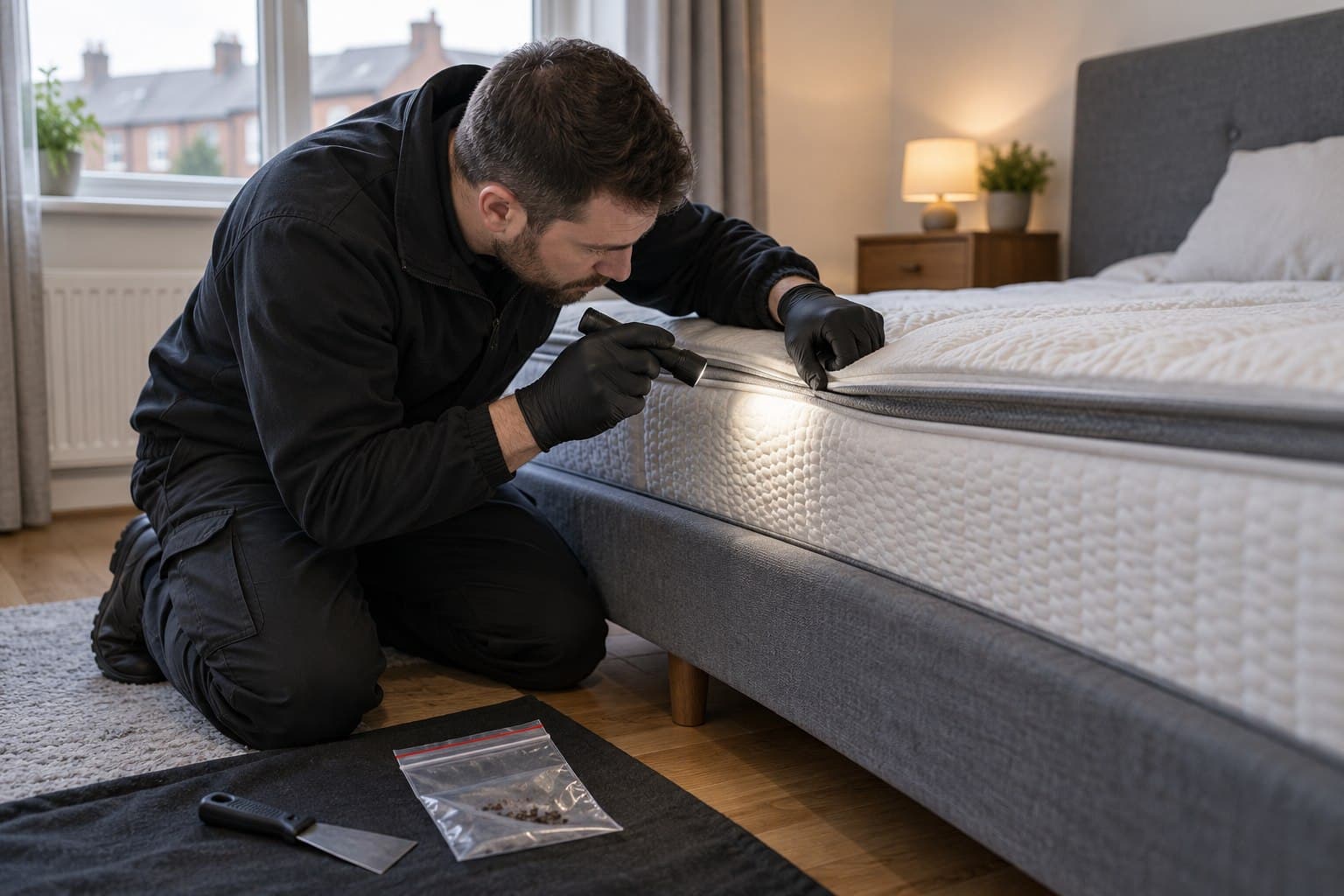
If you suspect bed bugs in a Dublin apartment, document the evidence, report it in writing, stop moving bedding or furniture through the building and arrange professional identification promptly. Do not decide the cause or who should pay from bites alone. Apartment cases need cooperation because belongings, adjoining rooms and shared access can affect the inspection and treatment plan.
Supreme Pest Control provides bed bug inspection and treatment in Dublin for homes and accommodation settings. Send clear photographs or a safely contained specimen if you have one, the number of affected rooms and whether the property is a standalone apartment or part of a managed building.
How to Confirm Bed Bugs in an Apartment
Skin marks are not a reliable identification on their own. The US Centers for Disease Control and Prevention notes that reactions vary and can resemble mosquito or flea bites. Look for physical evidence around sleeping and resting areas:
- live, flat reddish-brown insects in mattress seams or bed-frame joints;
- dark spotting around mattress piping, headboards or nearby cracks;
- rust-coloured marks on bedding;
- pale shed skins or eggs in protected seams;
- activity in bedside furniture, skirting gaps or upholstered seating; and
- a specimen that can be safely contained for identification.
Photograph the item beside a familiar object for scale and note the exact room and location. Do not crush or discard the only specimen if it can be contained without touching it. If the evidence is uncertain, inspection should come before treatment. The existing Dublin bed bug signs and treatment guide provides a broader identification checklist.
What Tenants Should Do
- Notify the landlord or property manager promptly: send a dated written report with photographs and the affected room.
- Keep belongings in the apartment: do not carry bedding, clothes or furniture into halls, another unit, a friend's home or a shared laundry without instructions.
- Avoid changing bedrooms: moving sleeping locations can complicate the pattern and potentially widen the area that needs assessment.
- Do not apply several DIY products: tell the inspector about anything already used and where it was applied.
- Ask for preparation instructions: preparation depends on the method, room and occupant needs; do not empty the whole room by default.
- Flag practical needs: tell the provider about children, pets, pregnancy, respiratory sensitivities, mobility needs or anyone unable to complete preparation tasks.
- Keep records: retain messages, appointment dates, treatment instructions and follow-up observations.
What Landlords and Property Managers Should Do
A fast, organised response is more useful than starting with blame. Acknowledge the report, arrange identification, establish which rooms and units may need access, and give residents one consistent set of preparation instructions. Confirm who is coordinating keys, notices, contractors and follow-up visits.
In a multi-unit property, ask whether the inspection scope should include rooms beside, above or below the reported activity. That does not mean every neighbouring apartment is infested or automatically needs treatment. It means the provider should assess movement risk, building layout and evidence rather than treating one mattress as an isolated object.
Who Is Responsible for Bed Bug Treatment in Ireland?
Responsibility and treatment cost depend on the facts; this article is not legal advice. The Residential Tenancies Board says landlords must ensure rental properties meet minimum standards and tenants must keep the property in good condition, report problems as soon as possible and allow necessary access. The RTB's current minimum standards guidance also says measures must be taken to prevent pest and vermin infestations.
Those general duties do not prove who introduced bed bugs in a particular apartment or create a simple universal rule for the invoice. Relevant evidence may include the move-in date, inventory or condition report, earlier complaints, activity in other units, recent travel or furniture movement, and how quickly the problem was reported. If responsibility is disputed, keep treatment coordination separate from accusations and seek case-specific RTB or legal guidance.
How Bed Bugs Can Spread in Apartment Buildings
Bed bugs do not fly or jump. They are commonly carried in luggage, clothing, soft furnishings and furniture, and they can crawl into protected gaps. In an apartment setting, moving an infested item through a corridor, lift, stairwell or shared laundry can expose other areas. Connected rooms and repeated occupant turnover also make accurate records important.
Do not label the source from cleanliness or appearance. The CDC bed bug guidance states that infestations can occur in apartments, houses and hotels and that cleanliness does not determine whether bed bugs are present. Focus on evidence and containment instead of stigma.
What a Professional Apartment Inspection Should Cover
- the room where activity was first reported;
- mattress seams, bed frame, headboard and nearby furniture;
- skirting edges, cracks and protected harbourage near resting areas;
- upholstered seating where occupants spend long periods;
- other rooms where bedding or furniture was moved;
- the need to assess adjoining areas based on layout and evidence; and
- anything residents have already sprayed, discarded or relocated.
The written or clearly recorded scope should distinguish inspection, treatment, preparation, follow-up and any excluded areas. Ask what evidence will be used to judge progress and who residents should contact if they find new activity between visits.
Preparing an Apartment for Bed Bug Treatment
Follow the provider's property-specific checklist. Over-preparing can spread items into clean areas, while under-preparing can block access to harbourages. Until instructions arrive, keep the room stable and avoid carrying loose belongings around the building.
- Laundry: handle bedding and clothes only as directed, using sealed bags for transport and storage.
- Clutter: reduce it carefully; do not transfer loose items into another apartment or room.
- Furniture: do not discard or dismantle large items unless the technician asks you to.
- Access: make the bed, skirting and relevant furniture reachable while keeping identified items contained.
- People and pets: arrange absence and re-entry according to the exact treatment instructions.
- Shared spaces: coordinate lifts, halls, waste areas and laundry use with the manager where necessary.
What Professional Treatment and Follow-Up Involve
The appropriate plan depends on confirmed evidence, infestation extent and the rooms involved. Supreme Pest Control's advertised bed bug process includes a detailed inspection, a customised plan, specialised insecticide treatment and follow-up visits. Ask which products and methods apply to your apartment rather than assuming every advertised bed bug method is available or suitable.
The service information says many plans may involve two to three visits, with timing set after inspection. Follow-up matters because the technician needs to review evidence, occupant reports and any newly observed activity. Do not stop cooperating with the plan simply because bites or sightings pause for a few days, and do not add unapproved products between visits.
What Affects a Bed Bug Treatment Quote?
A quote should reflect the property and confirmed treatment area. Important factors include the number of bedrooms and other affected rooms, the amount of furniture, evidence in adjoining spaces, preparation support, treatment method, number of planned visits and access coordination in a managed building.
Send the address or Eircode, apartment size, room count, clear evidence photographs, when the first sign appeared and any products already used. Ask whether inspection, all scheduled visits and follow-up are included. Do not accept a price that changes without an explanation of how the scope changed.
Why Choose Supreme Pest Control?
Supreme Pest Control offers Dublin bed bug inspection and treatment for residential and accommodation settings. The published service process includes inspection of bedding, furniture, cracks and crevices, a treatment plan based on the infestation, specialised insecticide application and follow-up visits. Free, no-obligation quotes are available using the property details.
For an apartment, explain whether you are the tenant, landlord or manager and whether other rooms or units have reported activity. The team can then confirm the appropriate inspection scope and preparation rather than treating every situation as a single-room job.
Request a Dublin Apartment Bed Bug Assessment
Send the Eircode, room count, safe photographs and when you first noticed evidence. Tell us whether the property is rented or managed so access and communication can be planned clearly.
Prefer a form? Request a bed bug treatment quote online.
After Treatment: Prevent Reintroduction and Track Activity
Keep treated and inspected items organised according to the technician's instructions. Attend every follow-up, report new evidence with dates and locations, and avoid bringing discarded furniture back into the building. When travelling, inspect sleeping areas and luggage before unpacking at home; when acquiring used furniture, examine it before it enters the apartment.
Property managers should maintain separate records for each issue and contractor. An indoor bed bug plan does not address rooftop or exterior pests; managers handling pigeon activity around a shared solar array can use the Dublin solar panel pigeon-proofing guide to coordinate that work lawfully and safely.
When to Seek Medical Advice
Bed bugs are a pest-control problem, while a skin reaction is a medical question. The CDC states that bed bugs are not known to spread diseases to people, but itching, sleep loss and rare allergic reactions can occur. Avoid scratching where possible and contact a healthcare professional for severe swelling, breathing difficulty, signs of infection or any reaction that concerns you. Pest technicians cannot diagnose a rash.
Frequently Asked Questions
What should I do first if I find bed bugs in a Dublin apartment?+
Photograph or safely contain a specimen if possible, stop moving bedding and furniture through the building, and report the issue to the landlord or property manager in writing. Arrange identification and inspection promptly. Bites alone are not enough to confirm bed bugs because other insects and skin reactions can look similar.
Who pays for bed bug treatment in a rented apartment in Ireland?+
There is no reliable one-line answer for every tenancy. Responsibility can depend on the evidence, when the problem appeared, the tenancy agreement, the condition of the property and whether spread involves other units. The RTB says landlords must meet rental minimum standards while tenants must keep the property in good condition, report problems promptly and allow access. Get case-specific advice from the RTB if cost responsibility is disputed.
Can bed bugs spread between apartments?+
Yes. They can be carried in belongings or furniture and may move through connected spaces. In a multi-unit building, the inspection plan may need to consider adjoining or otherwise linked rooms rather than treating one bed in isolation. The exact scope should be decided from evidence at the property.
Should I sleep in another room if I have bed bugs?+
Do not move bedding or belongings into another room without professional advice, because this can spread activity and make the treatment area larger. Continue following the provider’s preparation instructions and ask what sleeping arrangements are appropriate for the planned treatment.
Should I throw away my mattress?+
Not automatically. Discarding an untreated mattress can spread bed bugs through halls, lifts or shared waste areas, and replacement alone does not address insects hiding in the frame or room. Ask the inspector whether the item can remain, should be treated or must be disposed of under a controlled plan.
How many visits does bed bug treatment take?+
The number of visits depends on the evidence, room count, treatment method and follow-up findings. Supreme Pest Control’s service information says its plan may involve two to three visits spaced according to the infestation and selected treatment. The technician should confirm the schedule after inspection rather than promise a universal one-visit result.
Are bed bug bites dangerous?+
The CDC states that bed bugs are not known to spread disease to people, but bites may cause itching, loss of sleep and, rarely, allergic reactions. Bites cannot identify the insect by themselves. Seek medical advice for a severe reaction, signs of infection or another health concern.